Why Europe needs the
Bothnian Corridor
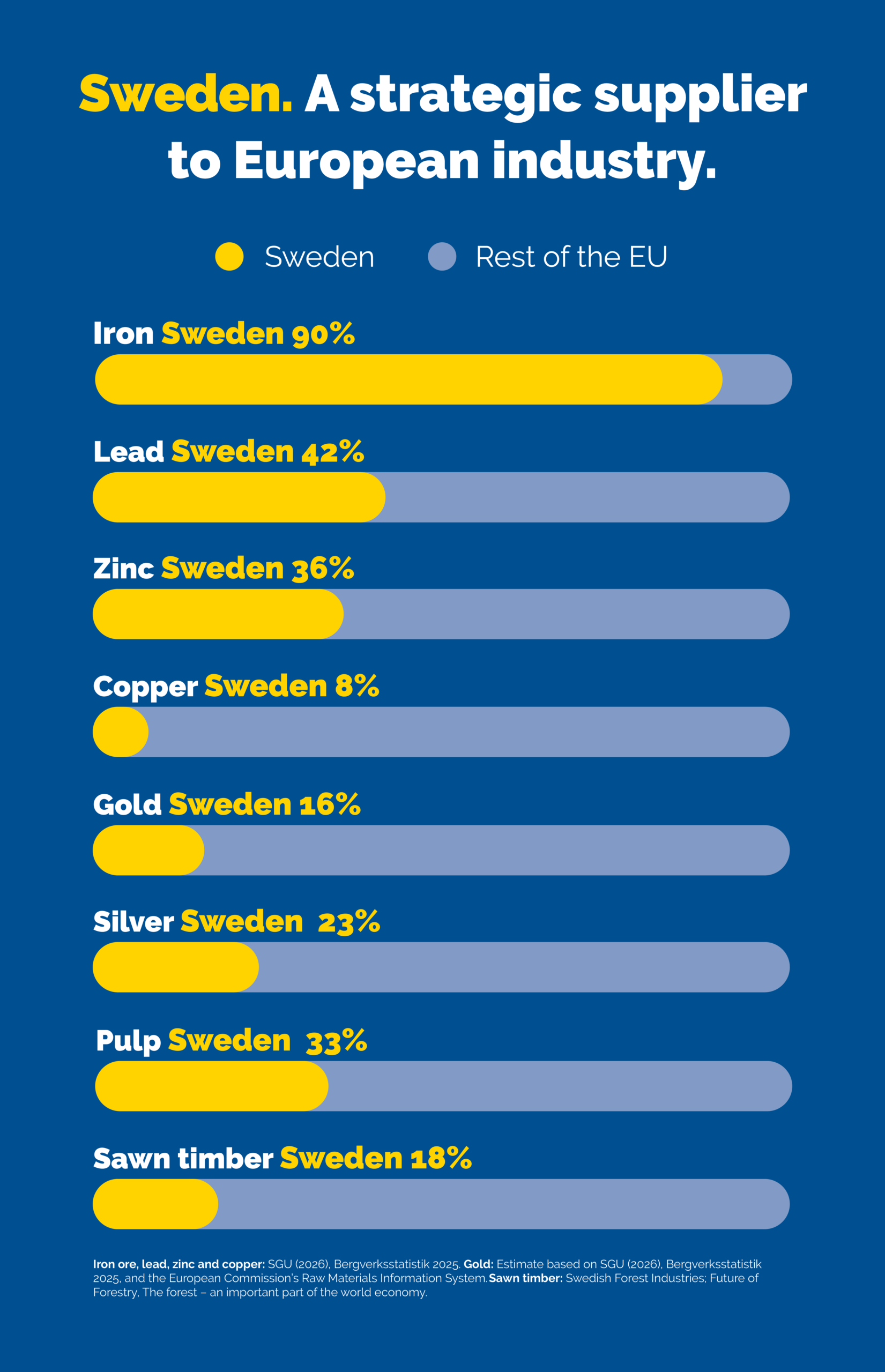
Sweden is a major source of raw materials for Europe. A strong Bothnian Corridor connects resources, industries and markets, strengthening European value chains and competitiveness.
Europe’s strength runs through the North
Europe’s industrial competitiveness depends on secure access to raw materials, reliable transport links and the capacity to invest for the long term. Northern and central Sweden hold significant mineral resources, forests and industrial expertise that already support manufacturing across Europe, while major investments are underway in cleaner production.
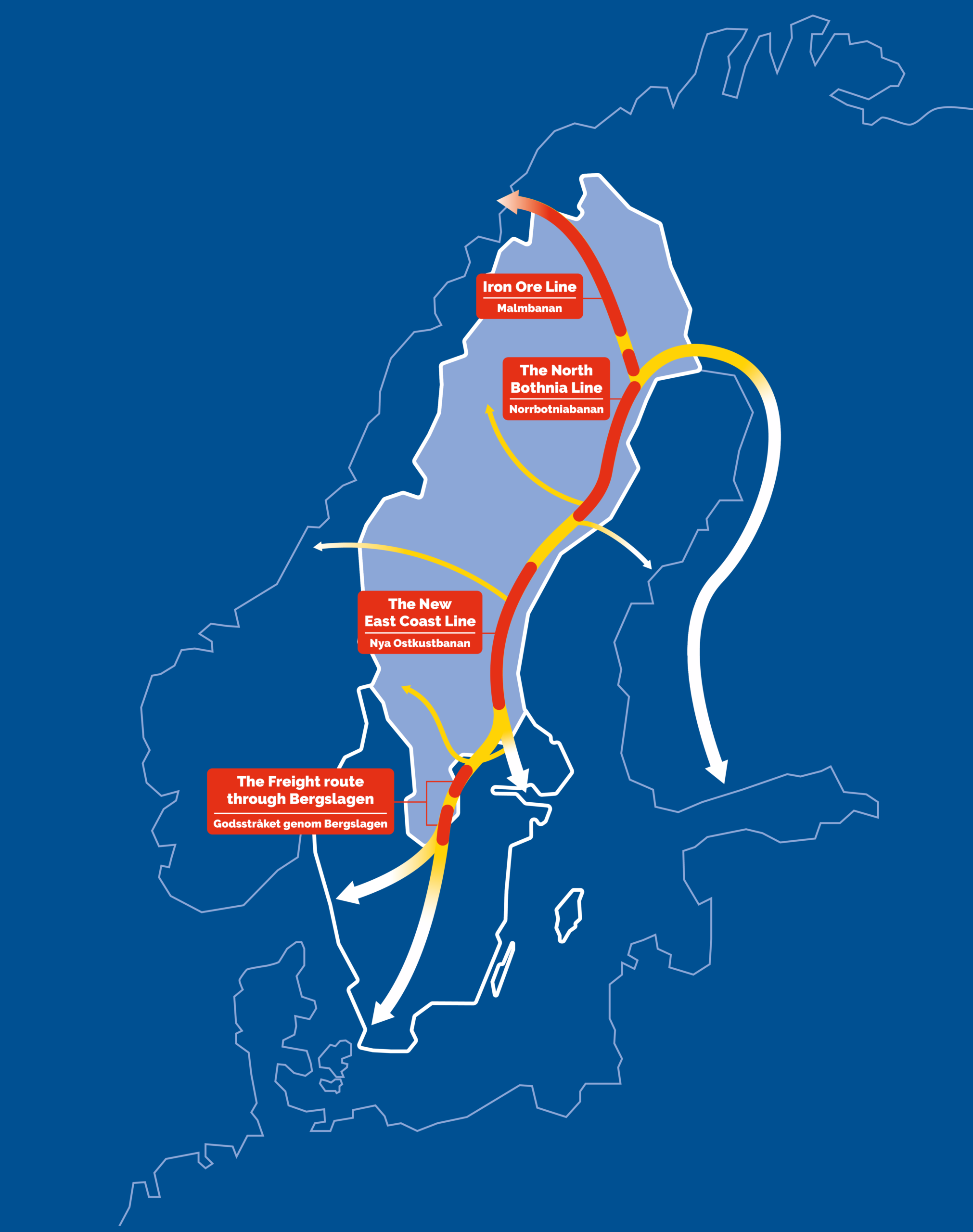
The Bothnian Corridor connects this region to European markets. As part of the EU’s core transport network, it links industries, communities and ports, with essential connections to Finland and Norway. Completing missing railway links and removing bottlenecks will enable Europe to make better use of its own resources, strengthen industrial supply chains and shift more freight from road to rail. Investing in the corridor reinforces Europe’s competitiveness and supports the green transition.
A strategic link for Europe’s security
The same railway that carries raw materials and industrial goods plays a critical role in Europe’s security. By connecting Sweden, Finland and Norway to the wider European transport network, the Bothnian Corridor supports both civilian logistics and military mobility.
Current bottlenecks and limited alternative routes leave the network vulnerable to disruption. Completing and upgrading the corridor will increase capacity and create greater resilience, ensuring that goods, supplies and personnel can continue to move — in normal conditions and in a crisis. These investments strengthen preparedness and cooperation within the EU and NATO.
For competitiveness
Stronger supply chains that enable European industry to secure and make fuller use of Europe’s own resources and production.
For security
Reliable cross-border connections that keep essential supplies, equipment and personnel moving, including during a crisis.
For industrial transition
Improved access to critical raw materials and technology that matches new industrial investments and the evolving needs of European industry.